
Free · On-device · No sign-up
Attractiveness Test: How Attractive Am I?
Upload a front-facing photo. In about two seconds your browser measures the part of attractiveness a photo can measure, symmetry and facial proportions, and shows where you sit against 1,088 reference portraits. Nothing is uploaded.
Your photo stays on your device for the free scan.
- facial landmarks
- 478
- facial landmarks
- reference photos
- 1,088
- reference photos
- second scan, on your device
- ~2
- second scan, on your device
- money-back guarantee
- 7-day
- money-back guarantee
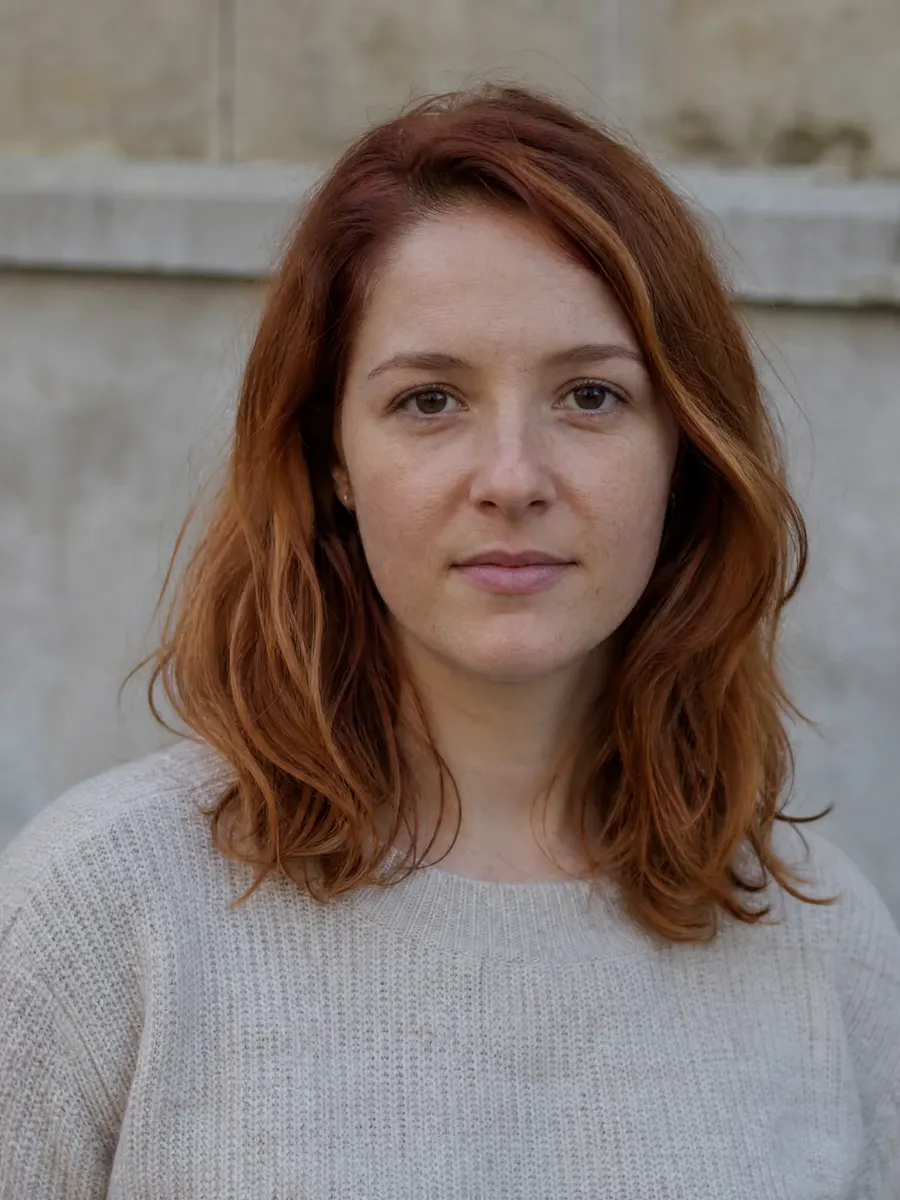 Example analysis
Guide
An attractiveness test can only be as honest as what it measures. This one measures your face's geometry in one photo: how symmetrical it is and how close its proportions sit to a typical face. Those are two of the traits research links most consistently to attractiveness. It does not see your skin, hair, expression or style, and it never claims to.
One measurement, three ways to read it
This test, the face rater and the PSL scale all read the same on-device measurement, so they always agree. This page explains what the number means for attractiveness. The face rater adds your face shape and strongest feature. For your profile, the side profile rater measures the angles of your forehead, nose, lips and chin.
What an attractiveness test can and cannot measure
Decades of studies point to a few facial traits that raise attractiveness ratings. Faces whose proportions sit close to the population's typical face are rated more attractive. When researchers average many photos into one composite, the composite is rated above most of the faces that made it. Symmetrical faces rate higher, and so do features that read clearly as masculine or feminine. People also agree with each other about who is attractive far more than "beauty is in the eye of the beholder" suggests, within and across cultures.
Geometry from a photo can measure the first two: symmetry, and how close your thirds, fifths and length-to-width sit to a typical face. That is what your score is. The rest of what makes someone attractive is not in the number.
- Skin
- Even tone and texture change ratings, but they depend on light and camera as much as on skin. Not measured.
- Expression
- A relaxed, genuine expression is rated warmer and more attractive. The test asks for a neutral face so expression does not move the landmarks.
- Hair, grooming and style
- Haircut, brows, facial hair and glasses frame the same geometry very differently. Not measured, and among the easiest things to change.
- Everything off camera
- Voice, movement, confidence and how you treat people shape attraction in person. No photo test sees any of it.
How to read your attractiveness score
Your score runs from 0 to 100 and compares your photo with 1,088 reference portraits measured the same way. 80 is what the median reference portrait scores, so 80 is typical, not a pass mark. Higher means your proportions sit closer to typical than most reference photos.
- 87 and above
- Closer to typical proportions and symmetry than three in four reference portraits.
- 70 to 87
- The middle half of the reference set. Most clear, front-facing photos land here.
- 60 to 70
- Below the middle half. Usually one term pulls the average down, and often it is the photo: a slight turn, a close lens or a smile.
- Below 60
- Read the photo before the face. Retake it straight on, at arm's length or further, in even light, and compare.
For a rating out of 10, divide by 10. The PSL scale page shows the same score on a 1 to 8 scale, where the median reference portrait is a 4.
Am I pretty? Am I ugly?
No photo test can answer either question, and you should be wary of any that says it can. What this test can tell you is narrower and more useful: whether your face measures as balanced in this photo, and which part of the measurement is strongest.
A low number is far more often about the photo than the face. Wide-angle selfies, a tilted head, side light and a big smile all move the landmarks the score is built on. Two photos of the same person, taken a minute apart, can land several points apart.
And if you are asking "am I ugly" because how you look has started to take up a lot of your day, that is worth mentioning to a doctor or a counsellor. Worry about appearance is very common, and it is treatable.
Why you can look less attractive in photos
Most people find photos of themselves less flattering than their reflection, and there are two measured reasons. A selfie taken about 30 cm from the face makes the nose look roughly 30% wider than a photo taken from 1.5 m, because the lens is so close. And people prefer the mirror-image version of their own face, the one they see every day, while their friends prefer the true image a camera records.
So before you believe a low score, take a better photo.
- Step back
- Hold the camera at arm's length or further, or use the 2x lens. Close wide-angle shots stretch the middle of the face.
- Camera at eye level
- Shooting from below or above changes every vertical ratio. Keep your chin level.
- Soft light from the front
- A window in front of you, not beside you. Side light carves one half of the face into shadow.
- Hair off the face
- Tuck hair behind your ears and off your forehead so the outline and brows are visible.
How to look more attractive
Your bone structure is the part of the score you cannot change, and it is a smaller part of attractiveness than people fear. The things people notice first are mostly in your hands: how hair frames the face, brow shape and grooming, skin care and sleep, posture, and a relaxed expression. In photos, add light and lens distance.
The free score shows where you stand. The Full Report reads every measurement of your face, ranks what will make the most visible difference for you across hair, grooming, skin, style and photo technique, and shows four previews of you with those changes.
What matters
- Symmetry (30%)
- How closely the left and right sides of your face mirror each other across the midline.
- Facial thirds (25%)
- How the face divides vertically into forehead, mid-face and lower face.
- Facial fifths (25%)
- How the face divides horizontally into five widths across the eyes.
- Proportion (20%)
- Your face's length-to-width ratio, compared with the typical reference portrait.
Research cited
- Langlois, J. H., & Roggman, L. A. (1990). Attractive faces are only average. Psychological Science, 1(2), 115–121.
- Langlois, J. H., et al. (2000). Maxims or myths of beauty? A meta-analytic and theoretical review. Psychological Bulletin, 126(3), 390–423.
- Rhodes, G. (2006). The evolutionary psychology of facial beauty. Annual Review of Psychology, 57, 199–226.
- Little, A. C., Jones, B. C., & DeBruine, L. M. (2011). Facial attractiveness: evolutionary based research. Philosophical Transactions of the Royal Society B, 366(1571), 1638–1659.
- Ward, B., et al. (2018). Nasal distortion in short-distance photographs: the selfie effect. JAMA Facial Plastic Surgery, 20(4), 333–335.
- Mita, T. H., Dermer, M., & Knight, J. (1977). Reversed facial images and the mere-exposure hypothesis. Journal of Personality and Social Psychology, 35(8), 597–601.
FAQ
Frequently asked questions
The Full Report
Know what suits your face — and what to do next.
Turn one private scan into 40+ measurements across 7 facial regions, styling guidance for your face shape, and a plan ordered around your highest-leverage area.
01Understand
Your harmony profile
See what drives your result in every measured region.
- Symmetry: 91 / 100
- Golden: 85 / 100
- Thirds: 88 / 100
- Fifths: 89 / 100
- Eyes: 92 / 100
- Jaw: 94 / 100
Real report component · sample data
02See
Your styling concept
Visualized on your own photo. Styling only — never a change to your features.
Feature readings
Every region read from your photo — and an honest “not scored” when a front photo can't support the claim.
- Face shape
- Oval92% match
- Canthal tilt
- +3.9°slightly upturned
- Eye spacing
- 0.46of face width
- Nose projection
- Not scoredneeds a side photo
Where you sit
Placement inside the reference band — not a bare grade out of 100.
03Act
The ranked plan
Follow your ranked first steps and a four-week plan.
Brow framing
Targets eyebrow symmetry
Sparse tails end the frame before it finishes — the region's lowest score.
Book a professional brow shape with the tails left full-length.
- Low
- $25–60
- 1 day
The fastest visible change in the report — and it upgrades the strongest region.
Every recommendation ranked, with upkeep, cost and time to the first visible result.
More free tests
478 · x · y · z
Ready to see your face, measured?
Free scan in seconds. Your full report with a ranked plan and AI previews is $17.49, once.