
Gratis · En tu dispositivo · Sin registro
Golden Ratio Face Calculator: Measure Your Facial Ratios
Upload a front-facing photo. Your browser measures your eye spacing, eye-to-mouth distance and more in about a second, and compares them with what research found and with a reference set of 1,088 photos. The measurement never leaves your device; the AI rating is one more click.
En el análisis gratis, tu foto se queda en tu dispositivo.
- puntos faciales
- 478
- puntos faciales
- fotos de referencia
- 1088
- fotos de referencia
- segundos de análisis, en tu dispositivo
- ~2
- segundos de análisis, en tu dispositivo
- garantía de reembolso
- 7 días
- garantía de reembolso
 Análisis de ejemplo
Guía
What is the golden ratio face, and is it real?
The golden ratio, about 1.618, is the idea that a proportion repeating through a face makes it beautiful. It is popular online and weakly supported: studies that measured real attractiveness ratings did not find 1.618 to be the peak.
What research did find is more modest. Pallett, Link and Lee (2010) asked people to judge faces whose features were moved by small amounts. Faces were rated most attractive when the eyes were spaced at about 46% of the face’s width and the distance from eyes to mouth was about 36% of the face’s length. Those are close to average proportions, not a magic constant.
How this calculator measures your face
Google’s MediaPipe Face Landmarker finds 478 points on your face inside your browser, including your pupils. After levelling a tilted head we measure each ratio and compare it with two yardsticks: the figure from the research above where one exists, and the middle half of a reference set of 1,088 photos from a public dataset.
One honest limit: the model’s top landmark is on the forehead, not the hairline, so face length here is shorter than in the research. Expect the eye-to-mouth ratio to read higher than 36%, and compare how you sit against the reference set instead of the decimals.
- Eye spacing
- The distance between your pupils divided by your face width. Research peak: about 46%.
- Eye-to-mouth distance
- From the line between your pupils to the centre of your mouth, divided by face length. Research peak: about 36% (measured to the hairline, so ours reads higher).
- Mouth ÷ nose width
- Your mouth width divided by the width of your nostrils. Often quoted, rarely tested; shown against the reference set only.
- Length ÷ width
- Face length divided by face width, in the same window as the others.
How to read your result
A ratio near a research figure does not make a face more attractive, and a ratio far from it does not make it less so. Real faces vary widely and the effects in the research are small. Use the numbers to learn what your photo shows, not to judge yourself.
Angle, lens and expression move every number. Wide-angle selfies stretch the middle of the face, a smile changes the mouth, and a head turned a little narrows one side. For the fairest reading use a level, front-facing photo at arm’s length.
What this cannot tell you
It measures proportions in one photo. It does not measure beauty, health or worth, and the reference set is a public dataset of celebrity photos, not the world. Treat it as a way to see your proportions, and ignore it if it does not help.
Qué importa
- Eye spacing and eye-to-mouth
- Both measured against the ranges research found attractive.
- Facial thirds
- Forehead, midface and lower face, and how hairline and brows shift them.
- Facial fifths and width
- Eye width, spacing and face width at the eyes, and length to width.
- Symmetry
- Left/right balance of eyes, brows, mouth and jaw. Normal asymmetry is no flaw.
References
- Pallett, P. M., Link, S., & Lee, K. (2010). New "golden" ratios for facial beauty. Vision Research, 50(2), 149–154.
- Rhodes, G. (2006). The evolutionary psychology of facial beauty. Annual Review of Psychology, 57, 199–226.
FAQ
Preguntas frecuentes
El Informe Completo
Descubre qué le sienta bien a tu cara y qué hacer después.
Convierte un análisis privado en más de 40 medidas en 7 regiones faciales, consejos de estilo para tu forma de cara y un plan ordenado en torno a tu área de mayor impacto.
01Entiende
Tu perfil de armonía
Mira qué influye en tu resultado en cada región medida.
- Simetría: 91 / 100
- Áurea: 85 / 100
- Tercios: 88 / 100
- Quintos: 89 / 100
- Ojos: 92 / 100
- Mandíbula: 94 / 100
Componente real del informe · datos de ejemplo
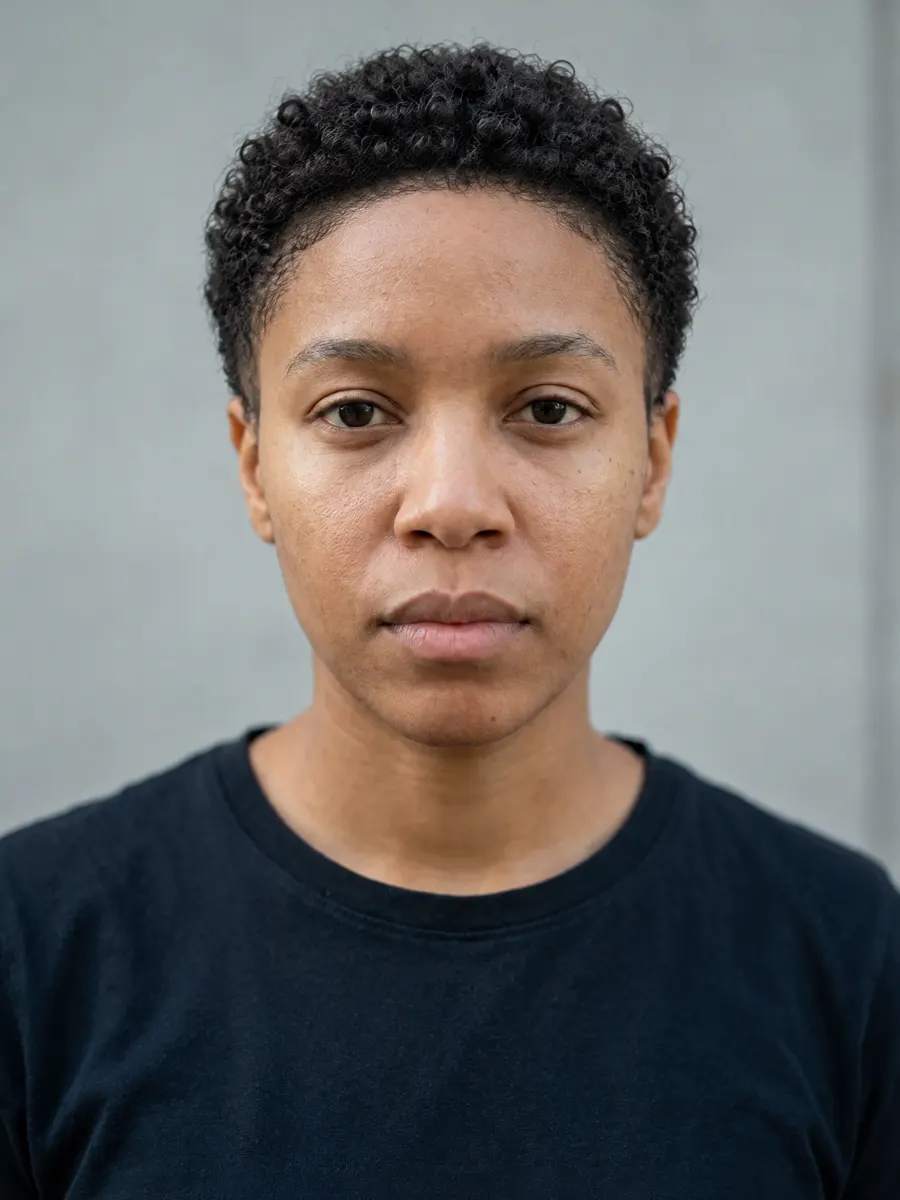
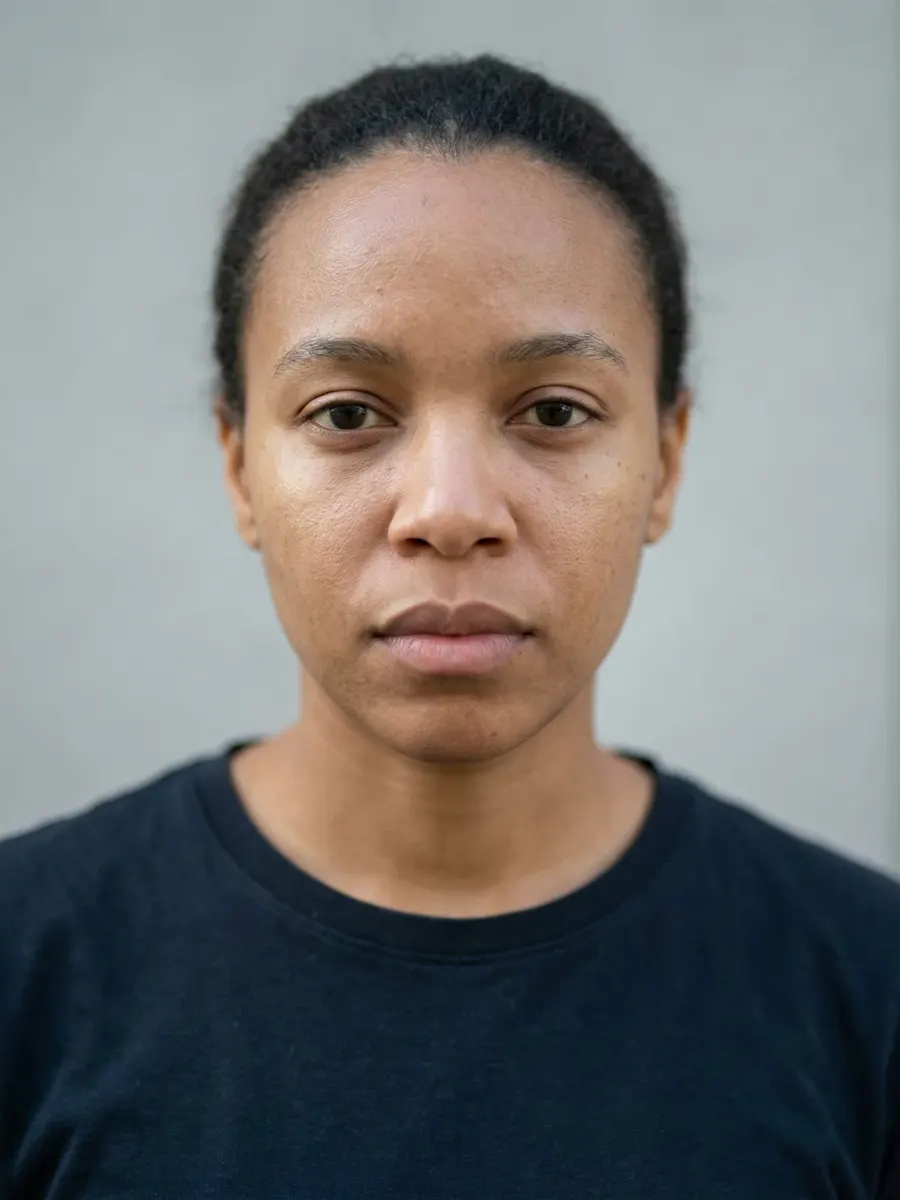
02Visualiza
Tu concepto de estilo
Visualizado en tu propia foto. Solo estilo: nunca un cambio en tus rasgos.
Lectura de rasgos
Cada región leída a partir de tu foto, y un honesto “sin puntuar” cuando una foto de frente no sostiene la conclusión.
- Forma de la cara
- Ovalada92% de coincidencia
- Inclinación de los ojos
- +3.9°ligeramente hacia arriba
- Separación de los ojos
- 0.46del ancho de la cara
- Proyección de la nariz
- Sin puntuarrequiere una foto de perfil
Dónde te sitúas
Tu posición dentro del rango de referencia, no una nota seca sobre 100.
03Actúa
El plan priorizado
Sigue tus primeros pasos priorizados y un plan de cuatro semanas.
Marco de las cejas
Enfocado en la simetría de las cejas
Las colas despobladas cierran el marco antes de tiempo: la puntuación más baja de la región.
Reserva un diseño de cejas profesional dejando las colas en su largo completo.
- Bajo
- $25–60
- 1 día
El cambio visible más rápido del informe, y mejora tu región más fuerte.
Cada recomendación priorizada, con mantenimiento, coste y tiempo hasta el primer resultado visible.
Más tests gratis
478 · x · y · z
¿Listo para ver tu cara medida?
Análisis gratis en segundos. Tu informe completo con plan priorizado y vistas previas con IA cuesta 17,49 US$, un solo pago.