
Your Clothes Are Talking. What Are They Saying? A Guide to Finding Your Style (Without Going Broke)
This is a guide for the rest of us. For the people with closets full of confusion. For the people who want to look a little more like themselves, without having to sell a kidney.
 Olivia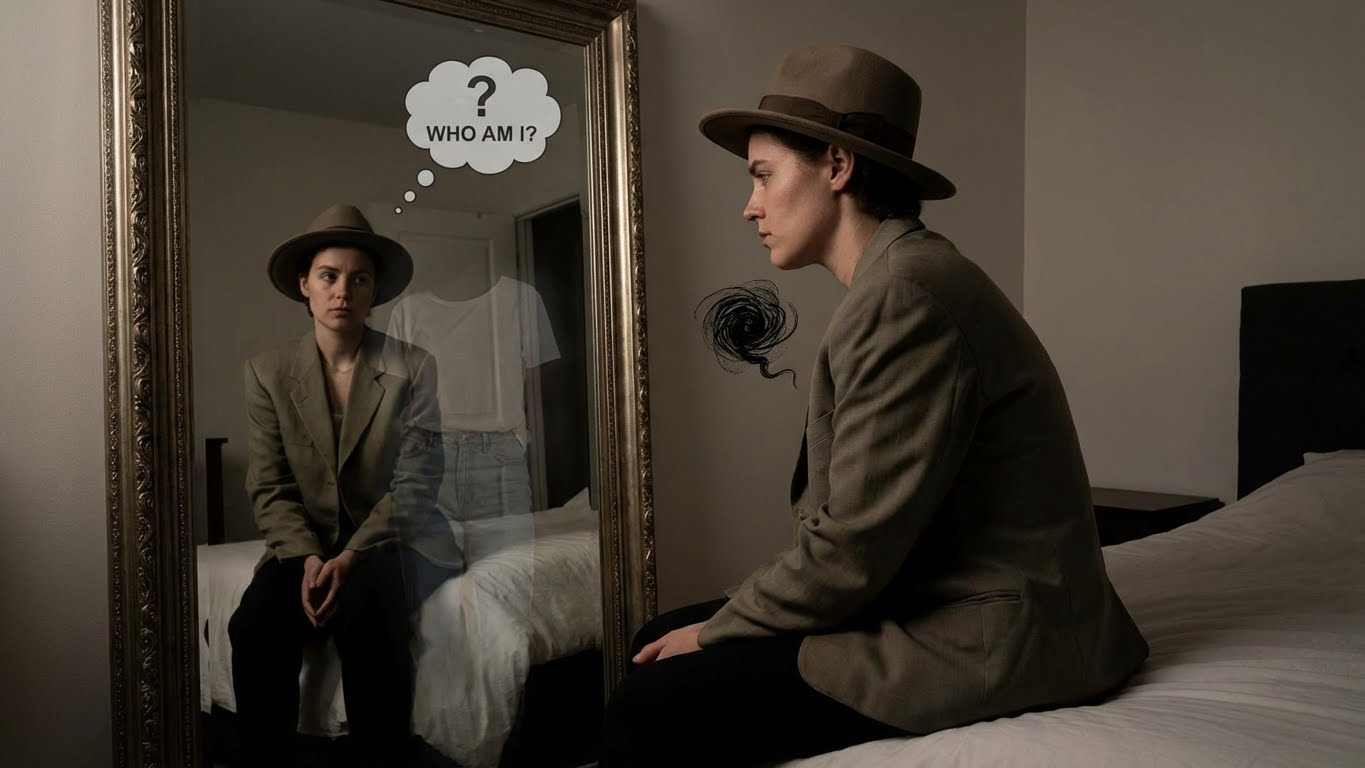
You have a closet full of clothes, but nothing to wear.
It’s a cliché. It’s a meme. It’s also painfully, universally true for so many of us. You stand there, wrapped in a towel, staring at a sea of fabric you spent actual, hard-earned money on, and you feel… nothing. Or worse, you feel a vague sense of dread, a quiet panic. That shirt was an impulse buy from a store with loud music and flattering lighting. Those pants don’t fit quite right, they dig in when you sit down. That dress belongs to a version of you that you were pretending to be for a week, a version who goes to rooftop parties and drinks cocktails. Your real life involves a couch and Netflix.
So you grab the same old jeans and t-shirt. Again. Not because you love them, but because they’re safe. They’re easy. They don’t require any thought. They’re the uniform of “I give up.” And every time you put them on, a tiny part of your soul withers and dies.
Finding your “personal style” sounds like something reserved for movie stars and impossibly cool people on the internet. It sounds expensive. It sounds exhausting. It sounds like you need a degree in color theory and a trust fund. It sounds like something for other people.
But what if it’s not? What if style isn’t about following trends or buying the latest “it” bag? What if it’s just about making your outside match your inside? What if it’s a language, a way of telling a story about who you are, without having to say a word? What if it's a tool for confidence, not a source of anxiety?
This is a guide for the rest of us. For the people with closets full of confusion. For the people who want to look a little more like themselves, without having to sell a kidney. Let’s talk about how to figure out your style, and how to do it on the cheap. This is style therapy.
Step 1: Forget About Fashion. Who The Hell Are You?
This is the most important step, and it’s the one everyone skips in their rush to the checkout counter. We see a cool outfit on Instagram, we buy it, and then we wonder why we feel like we’re wearing a costume. It’s because the clothes belong to someone else’s story, someone else’s life. You’re just an actor in their play.
Before you buy a single new thing, you need to do a little bit of detective work on yourself. This is the archaeology of your own soul. Grab a notebook, or open a new note on your phone. Be brutally, unflinchingly honest. Nobody’s going to see this but you.
The Interrogation:
What’s your real, actual, non-fantasy life like? Do you work in a corporate office that’s freezing cold? Are you a freelancer who works from a coffee shop? Are you chasing a toddler around a playground all day? Are you a student who lives in the library and survives on caffeine? Be specific. If you spend 90% of your time in sweatpants because you work from home, write that down. Your clothes need to work for your life, not the life you see in a Nancy Meyers movie.
What fabrics make you feel… not gross? This is about the physical sensation of wearing clothes. Do you love the feeling of soft, cozy fabrics like cashmere or merino wool? Do you feel powerful and put-together in structured, sharp materials like a good twill or poplin? Do you feel free and comfortable in loose, flowy things like linen or silk? Or does the thought of silk make you feel slimy? Pay attention to texture. Your skin knows what it likes.
Who are your style spirit animals? Think of three people (real or fictional) whose style you love. And I mean really love. Maybe it’s the effortless cool of Zendaya. Maybe it’s the classic, timeless elegance of Audrey Hepburn. Maybe it’s the quirky, intellectual vibe of Diane Keaton in Annie Hall. Maybe it’s your cool aunt who wears amazing jewelry. What is it about them? Is it their confidence? Their playfulness? Their don’t-give-a-damn attitude? Don’t just think about the specific clothes. Think about the vibe. You’re not trying to copy them. You’re trying to distill the essence of what you admire. You’re making a mood board for your soul.
What are your three “adjectives”? If you had to describe your ideal self, the version of you that you’re striving to be, in three words, what would they be? Creative? Polished? Approachable? Edgy? Comfortable? Powerful? Playful? Write them down. These are your style north stars. When you’re getting dressed, you can ask yourself: “Does this outfit make me feel [your adjective]?” If the answer is no, it’s the wrong outfit.
After you’ve done this, you’ll have a blueprint. A messy, chaotic, probably contradictory blueprint, but a blueprint nonetheless. You’re not looking for a label like “boho” or “minimalist.” Those are boxes. You’re looking for a feeling. A direction. A story.
Step 2: The Low-Cost Style Upgrade (Or, How to Shop in Your Own Closet)
Now for the fun part. You can radically improve your style without spending a dime. This is about working with what you already have, but with more intention. It’s about seeing your closet not as a source of shame, but as a palette of possibilities.
Upgrade #1: The Magic of a Good Fit. No, Seriously.
This is the biggest, most impactful, least-sexy secret in all of fashion. A $20 pair of pants that fits you perfectly will look more expensive and stylish than a $500 pair that doesn’t. Fit is everything. It is the foundation upon which all style is built.
Go through your closet and pull out the things you like, but don’t wear. Be a clothing detective. Why don’t you wear them? Is the waist a little too loose, so you’re constantly hiking them up? Are the sleeves a little too long, making you feel like a child wearing your dad’s shirt? Is the hem an awkward length that visually cuts your legs in half? Most of these problems are fixable.
Find a local tailor. A good tailor is a magician. They are a wizard with a needle and thread. For a few bucks, they can make your clothes look like they were custom-made for your body. Hemming pants, taking in a waist, shortening sleeves, adding darts to a shirt—these are small changes that make a world of difference. It’s the best money you will ever spend on your wardrobe. You’ll suddenly have a bunch of “new” clothes that you actually want to wear.
Upgrade #2: The Power of the “Third Piece”
This is a classic stylist’s trick that sounds complicated but is actually dead simple. An outfit is often made up of two basic pieces: a top and a bottom. The “third piece” is the thing that pulls it all together, adds personality, and makes it look like you tried (even if you didn’t).
It could be a blazer (even a casual knit one). A cool jacket (denim, leather, bomber). A long cardigan. A vest. A scarf. A statement necklace. A hat. It’s the finishing touch. It’s the punctuation mark on your outfit’s sentence.
Look at your basic outfits—your jeans and t-shirts, your simple dresses. Now, go through your closet and find a third piece to add. That boring outfit suddenly has a point of view. It looks intentional. It looks like style. You probably already own a bunch of potential third pieces that are gathering dust. Start experimenting with them. Throw a blazer over a graphic tee. Cinch a dress with a belt. See what happens.
Upgrade #3: Your Face is Part of Your Outfit (The Final Frontier)
We spend so much time and anxiety thinking about our clothes, and we forget that our face is the first thing people see. It’s the focal point of the whole operation. You don’t need a full face of makeup, but a little bit of grooming and intention goes a long way in making you feel polished and confident.
Find a simple, 5-minute routine that makes you feel put-together. Maybe it’s just brushing your eyebrows up and putting on some tinted lip balm. Maybe it’s a bit of concealer under your eyes and a swipe of mascara. Whatever it is, make it a habit. It’s a signal to yourself that you’re ready to face the day.
And this brings up that old, nagging, toxic question again, doesn’t it? “Am I pretty?” We think that style is about hiding our flaws, but it’s really about highlighting what we like. When you feel good about your face, you carry yourself differently. Your shoulders go back. Your chin comes up. Your whole outfit looks better because the person wearing it feels better.
This is where a tool like nanorater.com can be surprisingly helpful, even for style. It’s a face rater, yes, but think of it as an objective eye for your total look. You can take a selfie in your new, third-piece-enhanced outfit and see how it all comes together. The AI isn’t just looking at your face in a vacuum; it’s looking at the whole picture. Does your hairstyle complement the neckline of your shirt? Does your minimal makeup look balanced and fresh? It’s a way to get feedback on your total look, turning the anxiety of “Does this look good on me?” into a more manageable set of data points. It helps you move from feeling to fact.
Step 3: The Smart Shopper’s Manifesto (A Vow to Yourself)
Okay, so you’ve worked with what you have. You’ve rediscovered old friends in your closet. Now you’re ready to add a few new things. But you’re not going to shop the way you used to. You’re not going to wander aimlessly through a store, hoping for inspiration to strike. You’re going to be a sniper, not a machine gunner. You’re on a mission.
Manifesto Point #1: Quality Over Quantity. Always.
Fast fashion is like fast food. It’s cheap, it’s tempting, it gives you a quick hit of dopamine, and it makes you feel bad afterwards. That $15 shirt that falls apart, pills, or loses its shape after two washes is not a bargain. It’s trash that you paid for.
It’s better to have a small closet full of things you love and that will last, than a huge closet full of disposable junk. Save up for the slightly more expensive, well-made version. Look for natural fabrics like cotton, linen, wool, and silk. They feel better on your skin, they hang better on your body, and they last longer. Buy one good thing instead of five cheap things. Your future self will thank you.
Manifesto Point #2: Thrifting is Your Superpower. Use It Wisely.
Secondhand stores are treasure chests. They are libraries of past styles and forgotten gems. You can find high-quality, unique pieces for a fraction of the original price. It takes a bit more patience, but the payoff is huge. You’re not just saving money; you’re developing a truly personal style that can’t be bought in a mall. You’re also being more sustainable, which is always a good look.
Go to thrift stores in wealthier neighborhoods (people donate better stuff). Go on weekdays when they’re less crowded and have just restocked. Have a list of things you’re looking for (e.g., “a black blazer,” “high-waisted jeans”), but also be open to unexpected discoveries. Touch everything. Feel the fabrics. Ignore the size on the tag and just try things on.
Manifesto Point #3: The 24-Hour Rule. A Cure for Impulse.
Impulse buying is the enemy of personal style and the friend of credit card debt. It’s driven by a momentary feeling, not a long-term vision. If you find something you love, put it on hold or put it in your online cart. Then, walk away.
Wait 24 hours. If you’re still thinking about it the next day, and you can clearly imagine three different outfits you could create with it using clothes you already own, then you can consider buying it. If you’ve forgotten about it, or the initial excitement has worn off, you’ve saved yourself from another closet orphan. This one simple rule will save you hundreds, if not thousands, of dollars.
Putting It All Together: The Art of the Experiment
Finding your style is not a destination. It’s not a test you pass. It’s an ongoing process. It’s a conversation you have with yourself every day when you get dressed. It will change as you change. And that’s the beautiful part.
So, experiment. Have fun. Wear the weird thing. Combine the two things you thought would never go together. Some days it will work. You’ll feel like a style icon. Some days it won’t. You’ll feel like a clown. And that’s okay. Every “bad” outfit teaches you something. It refines your taste. It hones your instincts.
Document your successes. When you put together an outfit that makes you feel amazing—powerful, creative, comfortable, whatever your adjectives are—take a picture. Create a folder on your phone of your greatest hits. On days when you feel lost and have “nothing to wear,” you can look back at that folder for inspiration. It’s your own personal style guide, starring you.
And when you’re documenting your looks, don’t just snap a blurry, poorly-lit mirror pic. Try to take a good photo. Think about the light. Think about your pose. The nanorater can be your secret weapon here, too. It can help you see which of your outfits are not just cool in theory, but also photograph well. It’s a way to refine your understanding of what works, not just in the mirror, but in the world (and on the internet). It’s the final check, the objective eye that confirms, “Yes, that looks as good as you feel.”
Ultimately, style is a form of self-care. It’s a way of showing up for yourself. It’s a way of telling the world, “This is who I am today.” And that person is always worth celebrating, in all their messy, beautiful, work-in-progress glory. Now go open your closet. It’s not a graveyard anymore. It’s a playground. Go play.