
Grátis · No aparelho · Sem cadastro
Golden Ratio Face Calculator: Measure Your Facial Ratios
Upload a front-facing photo. Your browser measures your eye spacing, eye-to-mouth distance and more in about a second, and compares them with what research found and with a reference set of 1,088 photos. The measurement never leaves your device; the AI rating is one more click.
Na análise grátis, sua foto fica no seu aparelho.
- pontos faciais
- 478
- pontos faciais
- fotos de referência
- 1.088
- fotos de referência
- segundos de análise, no seu aparelho
- ~2
- segundos de análise, no seu aparelho
- garantia de reembolso
- 7 dias
- garantia de reembolso
 Exemplo de análise
Guia
What is the golden ratio face, and is it real?
The golden ratio, about 1.618, is the idea that a proportion repeating through a face makes it beautiful. It is popular online and weakly supported: studies that measured real attractiveness ratings did not find 1.618 to be the peak.
What research did find is more modest. Pallett, Link and Lee (2010) asked people to judge faces whose features were moved by small amounts. Faces were rated most attractive when the eyes were spaced at about 46% of the face’s width and the distance from eyes to mouth was about 36% of the face’s length. Those are close to average proportions, not a magic constant.
How this calculator measures your face
Google’s MediaPipe Face Landmarker finds 478 points on your face inside your browser, including your pupils. After levelling a tilted head we measure each ratio and compare it with two yardsticks: the figure from the research above where one exists, and the middle half of a reference set of 1,088 photos from a public dataset.
One honest limit: the model’s top landmark is on the forehead, not the hairline, so face length here is shorter than in the research. Expect the eye-to-mouth ratio to read higher than 36%, and compare how you sit against the reference set instead of the decimals.
- Eye spacing
- The distance between your pupils divided by your face width. Research peak: about 46%.
- Eye-to-mouth distance
- From the line between your pupils to the centre of your mouth, divided by face length. Research peak: about 36% (measured to the hairline, so ours reads higher).
- Mouth ÷ nose width
- Your mouth width divided by the width of your nostrils. Often quoted, rarely tested; shown against the reference set only.
- Length ÷ width
- Face length divided by face width, in the same window as the others.
How to read your result
A ratio near a research figure does not make a face more attractive, and a ratio far from it does not make it less so. Real faces vary widely and the effects in the research are small. Use the numbers to learn what your photo shows, not to judge yourself.
Angle, lens and expression move every number. Wide-angle selfies stretch the middle of the face, a smile changes the mouth, and a head turned a little narrows one side. For the fairest reading use a level, front-facing photo at arm’s length.
What this cannot tell you
It measures proportions in one photo. It does not measure beauty, health or worth, and the reference set is a public dataset of celebrity photos, not the world. Treat it as a way to see your proportions, and ignore it if it does not help.
O que importa
- Eye spacing and eye-to-mouth
- Both measured against the ranges research found attractive.
- Facial thirds
- Forehead, midface and lower face, and how hairline and brows shift them.
- Facial fifths and width
- Eye width, spacing and face width at the eyes, and length to width.
- Symmetry
- Left/right balance of eyes, brows, mouth and jaw. Normal asymmetry is no flaw.
References
- Pallett, P. M., Link, S., & Lee, K. (2010). New "golden" ratios for facial beauty. Vision Research, 50(2), 149–154.
- Rhodes, G. (2006). The evolutionary psychology of facial beauty. Annual Review of Psychology, 57, 199–226.
FAQ
Perguntas frequentes
O Relatório Completo
Saiba o que combina com o seu rosto — e o que fazer depois.
Transforme uma análise privada em mais de 40 medidas em 7 regiões do rosto, dicas de estilo para o seu formato e um plano organizado em torno da sua área de maior impacto.
01Entenda
Seu perfil de harmonia
Veja o que influencia seu resultado em cada região medida.
- Simetria: 91 / 100
- Áurea: 85 / 100
- Terços: 88 / 100
- Quintos: 89 / 100
- Olhos: 92 / 100
- Mandíbula: 94 / 100
Componente real do relatório · dados de exemplo
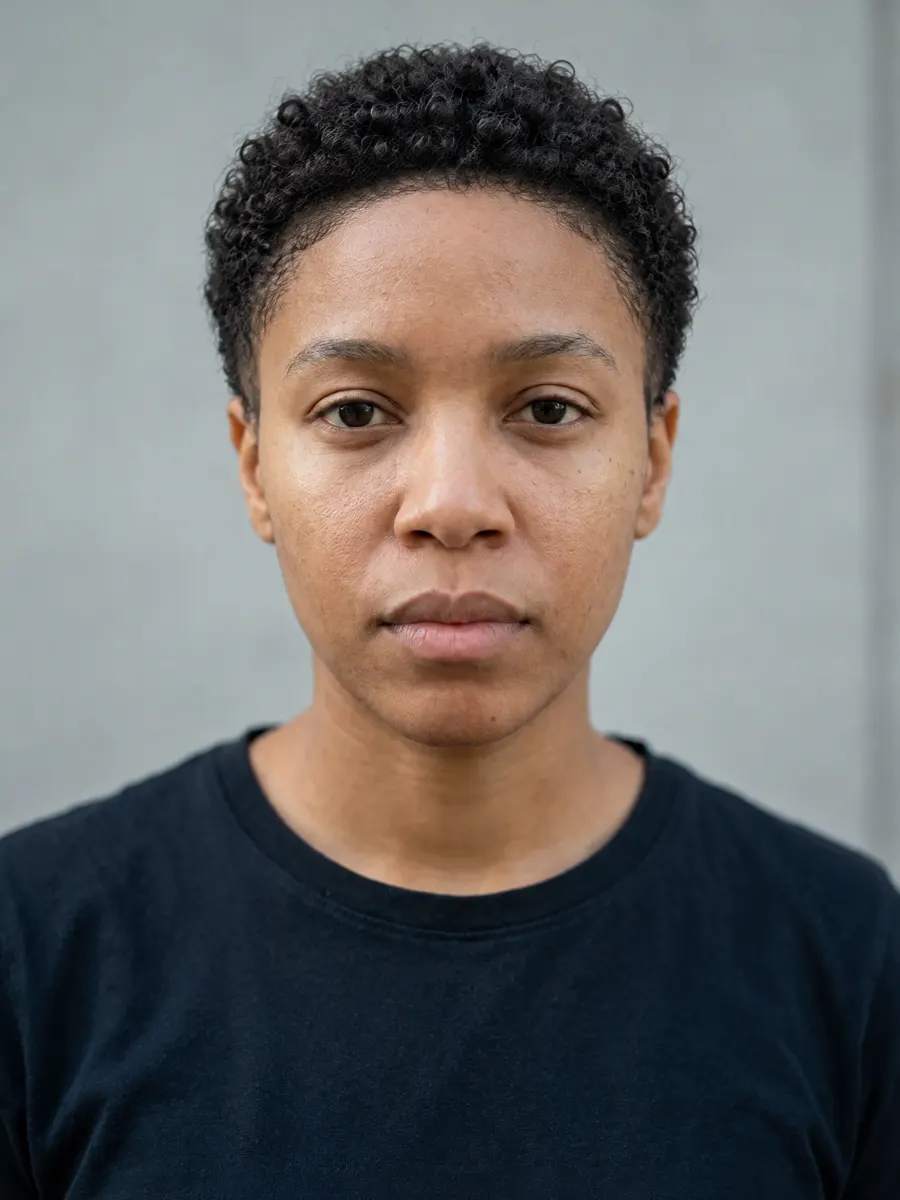
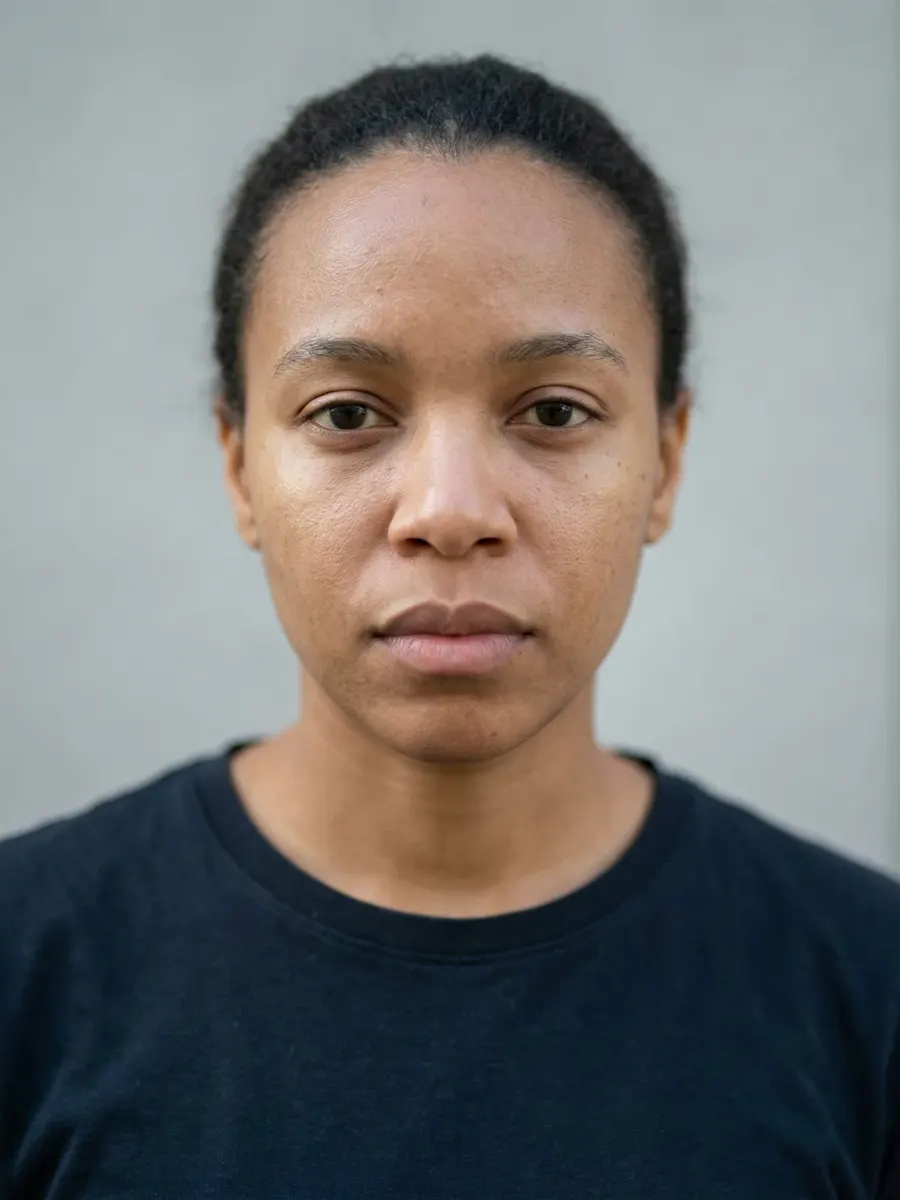
02Veja
Seu conceito de estilo
Visualizado na sua própria foto. Só estilo — nunca uma mudança nos seus traços.
Leitura dos traços
Cada região lida a partir da sua foto — e um honesto “sem nota” quando uma foto de frente não sustenta a conclusão.
- Formato do rosto
- Oval92% de correspondência
- Inclinação dos olhos
- +3.9°levemente para cima
- Distância entre os olhos
- 0.46da largura do rosto
- Projeção do nariz
- Sem notaprecisa de foto de perfil
Onde você está
Sua posição dentro da faixa de referência — não uma nota seca de 0 a 100.
03Aja
O plano priorizado
Siga seus primeiros passos priorizados e um plano de quatro semanas.
Moldura das sobrancelhas
Foco na simetria das sobrancelhas
As pontas falhadas encerram a moldura antes da hora — a menor nota da região.
Agende um design de sobrancelhas profissional mantendo as pontas no comprimento total.
- Baixo
- $25–60
- 1 dia
A mudança visível mais rápida do relatório — e ela eleva a sua região mais forte.
Cada recomendação priorizada, com manutenção, custo e tempo até o primeiro resultado visível.
Mais testes grátis
478 · x · y · z
Pronto para ver seu rosto medido?
Análise grátis em segundos. Seu relatório completo com plano priorizado e prévias com IA custa US$ 17,49, uma única vez.